
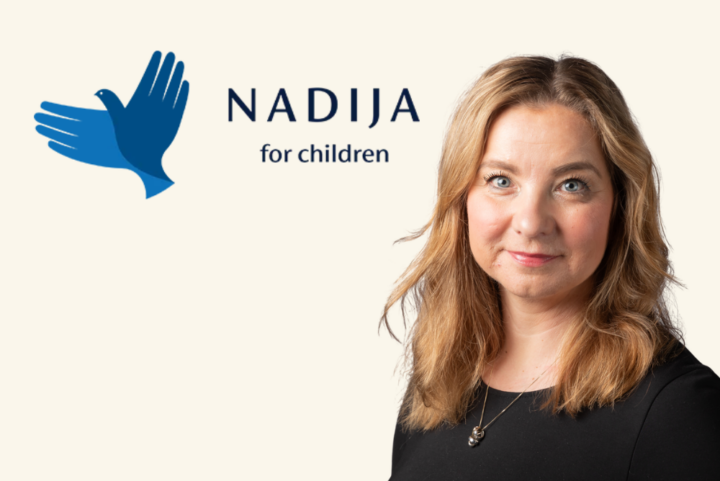
The Effects of War on Children to Be Studied at a New International Research Centre – Professor Kirsi Peltonen Appointed Chair of the Scientific Advisory Committee
The effects of war on children can extend for decades. The recently established Nadija Research Foundation supports research, education, and evidence-based policymaking on the impact of war on the physical and mental health of children and adolescents. Professor Kirsi Peltonen of the University of Turku has been appointed Chair of the Foundation’s Scientific Advisory Committee.
“If we do not study the effects of war on children and develop effective interventions, we risk losing the opportunity to support the wellbeing and functioning of an entire generation. Generating this knowledge is essential not only for Ukraine but also for other conflict-affected regions around the world,” says Peltonen.
The Nadija Research Foundation focuses particularly on the wellbeing of children in Ukraine who have been exposed to war and trauma. At the same time, its aim is to generate knowledge and solutions that can benefit children affected by armed conflicts globally.
The Research Foundation is part of the broader Nadija initiative, which includes a hospital specializing in war-related trauma in children, a virtual hospital, and the newly established research foundation. The word Nadija means hope in Ukrainian.
Better Treatment through Research
The Nadija Research Foundation aims to fund and coordinate high-quality research that generates new knowledge on the effects of war on children, as well as on ways to prevent and treat the consequences of trauma. The Foundation also seeks to support evidence-based decision-making and the development of health and social service systems.
The Scientific Advisory Committee, chaired by Peltonen, consists of international experts in child mental health, trauma research, and post-conflict recovery. The Committee is responsible for identifying research priorities and recommending research projects for funding. In Finland, the University of Helsinki is among the founding members of the Research Foundation, while the Scientific Advisory Committee independently guides the development of the Foundation’s research activities.
“Public attention understandably focuses on the political and geopolitical consequences of war. The wellbeing, mental health, and future of children can easily be overshadowed by these broader discussions. We need research to better understand how war affects children and what kinds of interventions can help them most effectively,” says Peltonen.
An Internationally Unique Initiative
According to Peltonen, the Foundation represents a significant international initiative, as there are few comparable research structures worldwide that focus specifically on children affected by war-related trauma.
What makes the initiative particularly distinctive is the close integration of research and clinical practice. Through the Nadija project, researchers will work in direct connection with a hospital specializing in war-related trauma in children. This creates a unique opportunity to examine the treatment of physical and psychological war-related trauma side by side within the same clinical setting.
“We know that severe physical injury and psychological wellbeing are closely interconnected, yet the integrated treatment of physical and psychological trauma has received relatively little research attention. We now have a unique opportunity to investigate how these forms of trauma can be treated simultaneously and how treatment processes can best support one another,” says Peltonen.
The aim is to ensure that research findings can be rapidly translated into clinical practice, while insights gained through patient care can in turn inform and guide future research.
Knowledge Generated in Ukraine Will Benefit Children Worldwide
The Nadija Research Foundation will fund both research projects aimed at developing effective interventions and large-scale population studies examining, for example, the long-term effects of war on children’s mental health, development, and wellbeing.
According to Peltonen, research conducted in Ukraine has the potential to benefit children living in conflict-affected settings around the world.
“The goal is not only to understand the consequences of war, but also to find ways to mitigate them and support children’s recovery as effectively as possible. The knowledge generated from the situation in Ukraine can, in the future, help children affected by armed conflicts elsewhere in the world as well,” says Peltonen.
More information:
Professor Kirsi Peltonen
kirsi.peltonen@utu.fi