The flagship structure has opened up new opportunities for interdisciplinary collaboration
Long-term and predictable funding is crucial if research is to be built into genuine collaboration and societal impact. This message emerged strongly when the representatives of Finland’s Flagships met to discuss the future of Flagships.
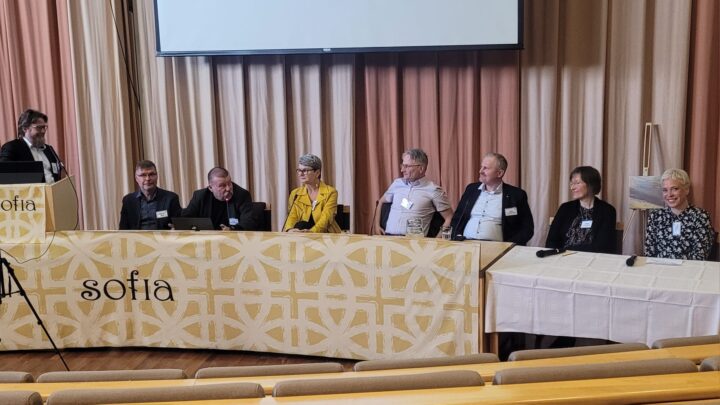
The Atmosphere and Climate Competence Center (ACCC) Flagship invited representatives from all 14 Flagships funded by the Research Council of Finland to the event National Flagships, the Future and Impact. Panel discussions explored both the role of Flagships in Finland’s research and development landscape and their societal impact, as well as collaboration between them. In the latter panel, INVEST Research Flagship Centre Vice Director, Professor Christina Salmivalli, highlighted a key benefit of the Flagship structure.
“Even for me, the Flagship has opened up interdisciplinarity in a completely new way. It is often emphasized, but building it takes time,” Salmivalli noted.
Having had a long academic career even before INVEST, Salmivalli pointed out that interdisciplinarity has been discussed for a long time, but its genuine realization requires concrete action and time.
“The permanent Flagship structure and the time horizon the structure allows have given us the opportunity to get to know each other and build collaboration. A shared language, trust, and common interests need to emerge. At INVEST, through joint seminars, conferences, and courses—and simply by getting to know one another—we have been able to open up to collaboration in entirely new ways,” Salmivalli said.
Salmivalli described how the emphasis on collaboration in the research field has evolved in stages: first internationalization was highlighted, then interdisciplinarity, followed by stakeholder engagement and citizen science—and now collaboration between Flagships is being called for.
“In this situation, it is important to ask what the goal of collaboration is. When the topic is genuinely interesting, collaboration emerges naturally.”
Salmivalli emphasized multifaceted collaboration, where researchers not only learn from each other’s methods but can also eliminate overlapping activities.
The aim of the event was to consider how top-level research can be transformed into lasting societal impact, what role Flagships play in Finnish and international ecosystems, and what kinds of collaboration can be developed between them. The discussion was complicated by the fact that several Flagships are currently awaiting information about possible continuation funding.
“We also discussed that collaboration between Flagships is not an end in itself. It is important to consider the purpose of collaboration. When the topic is interesting and complex, the motivation to collaborate arises naturally,” Salmivalli said, emphasizing quality over quantity.
The event also addressed the impact of Flagships. A key challenge is that many impacts—for example in drug development or education policy—may only become visible decades later.